Load & Service
Calculate utility service, panels, feeders and major equipment capacity.
Electrical · Dallas–Fort Worth
Electrical work planned around capacity, lighting, equipment, and everyday use.
What We Can Help With
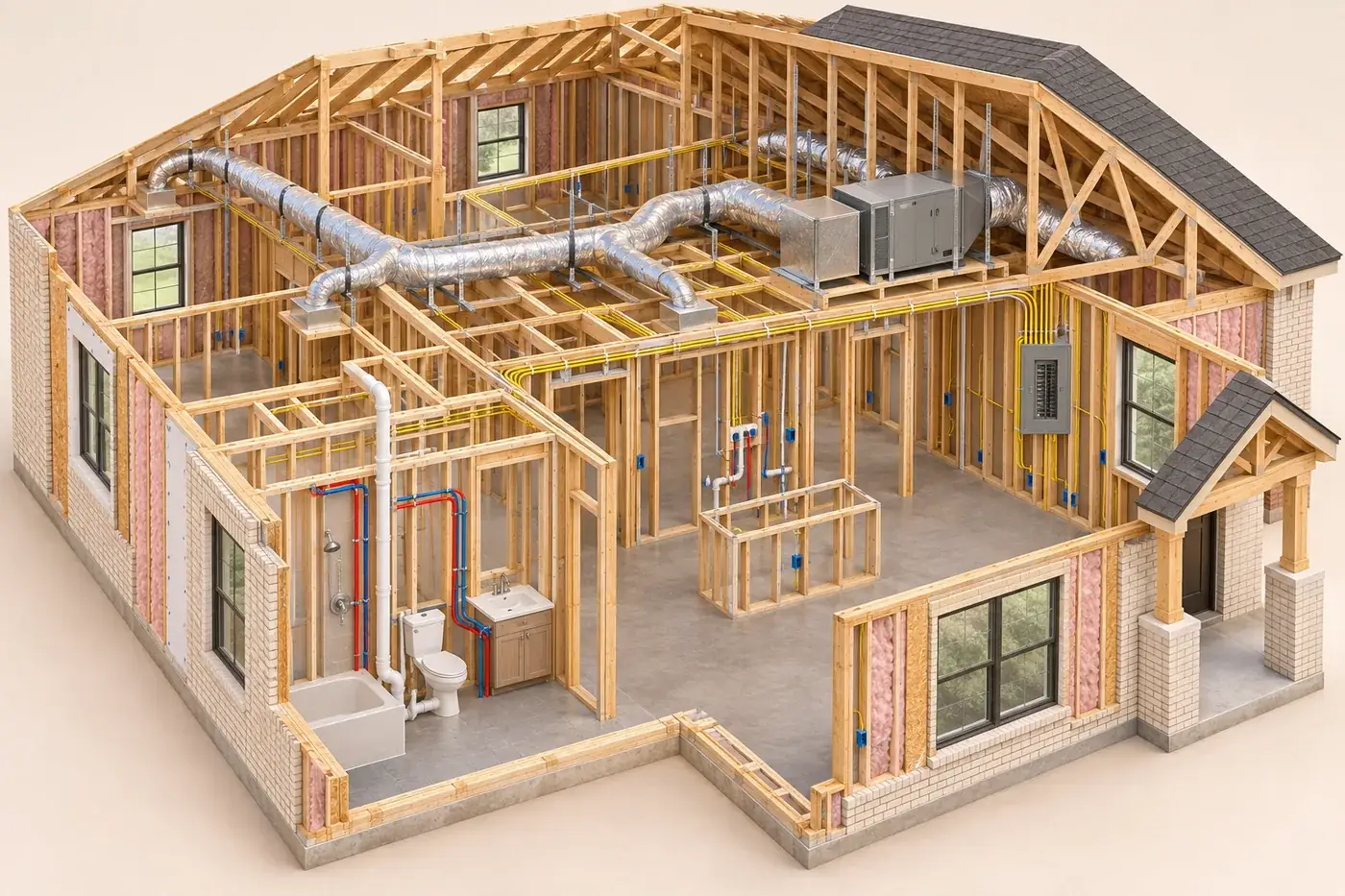
Define the work your property needs, whether it is part of a complete build or a focused improvement.
Electrical work planned around capacity, lighting, equipment, and everyday use. Early coordination with related trades helps clarify sequencing, access, and finish requirements before work begins.
For a useful electrical discussion, share: Plans, panel information, lighting preferences, and equipment or future capacity needs.
Answers To Help You Plan
Start with the proposed equipment list, actual building use and existing service information. Review voltage, phase, panel capacity, present loads and planned additions with the electrical team. Selective circuit tracing or load monitoring may be needed before deciding whether the service can remain or must be upgraded.
Include future loads before panel schedules, feeder routes and paving are finalized. Equipment location affects dedicated circuits, trenching, access and available space for later work. Distinguish installed equipment from future provisions in writing so spare pathways are not mistaken for a complete operating system.
Walk the layout against furniture, cabinetry, appliances, doors and the reflected ceiling plan. Confirm switch access, receptacle locations, task lighting and control zones with the owner. Record changes on the current drawings before rough inspection, rather than relying on verbal instructions passed between trades.
The scope should name who supplies disconnects, starters, controls and final connections for each equipment item. Coordinate vendor requirements with the electrician before procurement. This prevents a delivered appliance or mechanical unit from waiting on missing power, incompatible controls or an unassigned startup responsibility.
Utility coordination, approved equipment, service components, inspection release and shutdown access can all control energization. Put these dependencies in the master schedule instead of treating power as a final-day task. Coordinate equipment startup and building-system testing after the installation is ready to be safely energized.
Confirm panel identification, circuit labeling, device operation, controls and equipment connections against the completed scope. Testing should address the protection and emergency systems included in the design. Keep inspection and startup records, explain owner controls and preserve access to panels rather than covering them with later furnishings.
Licensed · Bonded · $5M Insured
Bring plans, a property address, or simply an idea. We’ll help you understand the next step.
Professional protection for residential and commercial work. No finished plans required.North Texas Field Note
Panels, service, HVAC, cooking, shop equipment, EV charging and backup power belong in one load conversation.
Technical Execution Guide
Electrical work should reflect real equipment and how rooms are used.
Calculate utility service, panels, feeders and major equipment capacity.
Coordinate lighting, switches, receptacles, dedicated circuits and low voltage.
Install boxes, raceways, conductors, grounding and firestopping before walls close.
Set devices, fixtures, panels, controls and owner equipment connections.
Label circuits and verify protection, polarity, grounding, controls and required inspections.
Detailed Field Guide
Electrical scope should begin with loads and operations, then define service, panels, circuits, devices, lighting, controls and low voltage. Future equipment is cheaper to plan before walls and paving close.
Start With Existing Conditions
Document utility service, voltage/phase, panel capacity, available fault information, existing loads, grounding, equipment and user requirements. Existing buildings may require selective tracing and load monitoring.
Define The Complete Assembly
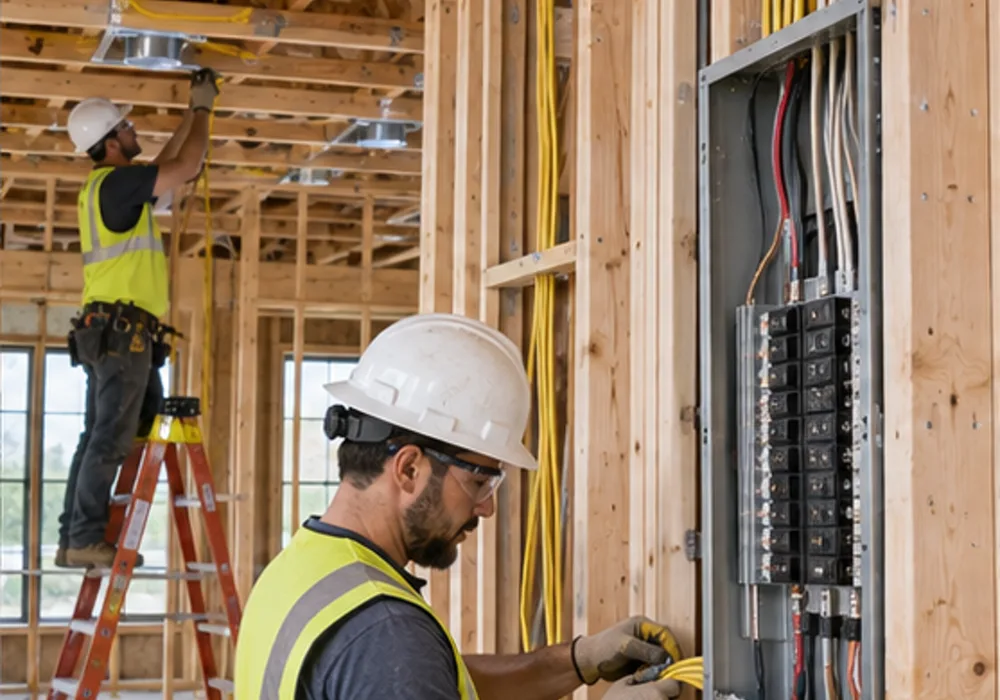
Define service, switchgear, panels, feeders, branch circuits, raceway/cable, grounding, devices, lighting, controls, emergency/exit systems and connections. Commercial gear and lighting controls require coordinated submittals.
Coordinate The Adjacent Trades
Coordinate utility, HVAC, plumbing equipment, kitchen/medical vendors, fire alarm, data, security, ceilings, millwork and structural penetrations. Confirm who provides disconnects, starters, controls and final connections.
Sequence The Work
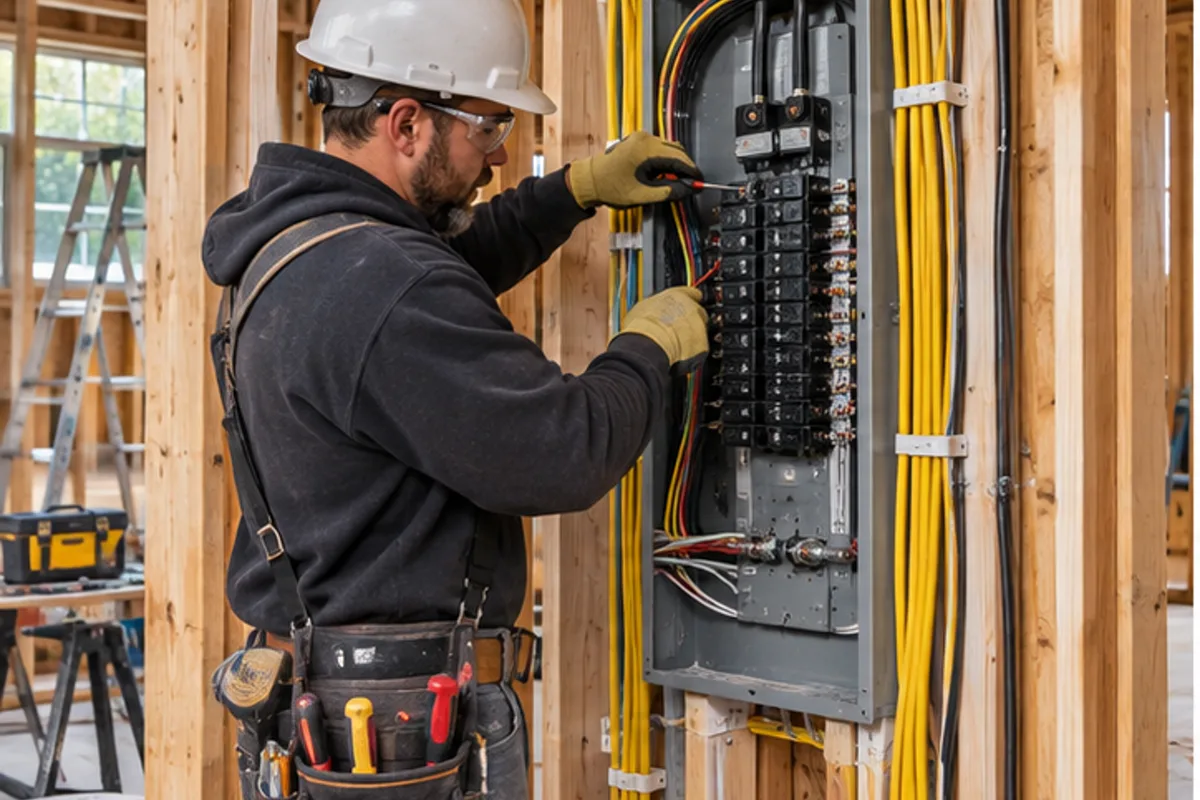
Confirm service and equipment requirements before releasing panels and distribution gear. Coordinate underground routes and rough-in with structure and other trades, then complete inspections before closure. Set devices, lighting and controls after finishes, obtain the required release for energization and verify circuit identification and equipment operation.
Quality-Control Hold Points
Inspect rough routing, supports, conductor/raceway fill, grounding and firestopping; then torque, label and test panels, protection, polarity, controls, emergency systems and equipment operation.
Cost Drivers And Allowances
Drivers include service upgrades, switchgear, trenching, copper, lighting package, controls, emergency power, low voltage and occupied shutdowns. State fixture and equipment allowances clearly.
Schedule And Procurement
Utility design, transformers and switchgear can be long-lead. Release approved gear early and plan shutdowns, inspections, energization and commissioning in the master schedule.