
Evaluation
Measure slab/subfloor moisture, flatness, movement and existing contamination.
Flooring · Dallas–Fort Worth
Flooring selected and installed for the way your home or commercial space is used.
What We Can Help With
Define the work your property needs, whether it is part of a complete build or a focused improvement.
Flooring selected and installed for the way your home or commercial space is used. Early coordination with related trades helps clarify sequencing, access, and finish requirements before work begins.
For a useful flooring discussion, share: Floor area, material preferences, subfloor condition, and whether the space will stay occupied.
Answers To Help You Plan
Surface appearance does not establish whether the slab meets the flooring and adhesive manufacturer's requirements. Review moisture history, test results, alkalinity where relevant and existing coatings or adhesive. Define preparation or moisture mitigation before installation so the selected finish is not placed over an unverified substrate.
The answer depends on the existing material, adhesion, moisture, flatness and the new system's requirements. Check how added height affects doors, cabinets, appliances and transitions. Any retained layers should be documented, with removal or correction included where the existing assembly cannot support the proposed installation.
Delivery should follow the product's environmental and acclimation requirements, with the building protected and appropriate conditioning available. Coordinate storage away from wet work and damaging traffic. Installation timing must also allow substrate and adhesive cure rather than treating material delivery as permission to start immediately.
Compare the full installed thickness of each system, not just the finish material. Coordinate underlayment, adhesive, tile assemblies, thresholds and adjacent doors before installation. Agree the transition profile and finished elevations early so a change in materials does not create an unintended obstruction or awkward edge.
Agree movement of furniture, phased access, removal routes, dust protection and the time before areas return to service. Define who disconnects or resets fixtures and equipment. Sequence the work around adhesive cure and safe transitions so unfinished edges do not become part of normal circulation.
Review seams, joints, transitions, adhesion or fastening, surface condition and protection against the specified system. Retain product and lot information, test records and cleaning instructions. Confirm any remaining cure restrictions and avoid introducing maintenance products that are incompatible with the installed flooring.
Licensed · Bonded · $5M Insured
Bring plans, a property address, or simply an idea. We’ll help you understand the next step.
Professional protection for residential and commercial work. No finished plans required.North Texas Field Note
Moisture, flatness, movement, transitions and occupied-space sequencing should be known before material is delivered.
Technical Execution Guide
Flooring failures often begin in the substrate.
Measure slab/subfloor moisture, flatness, movement and existing contamination.
Grind, patch, level, repair or install underlayment and moisture systems as needed.
Condition material, establish direction, transitions and expansion requirements.
Follow adhesive, fastening, joint, rolling and cure requirements.
Inspect, clean and protect completed flooring from remaining trades.
Detailed Field Guide
Flooring performance begins with the slab or subfloor. Moisture, alkalinity, flatness, movement and contamination must be evaluated against the selected manufacturer system.
Start With Existing Conditions
Record substrate type, age, moisture history, cracks, elevation changes, existing adhesive, deflection and occupied conditions. Use the tests required by the flooring and adhesive manufacturer, not an informal surface reading.

Define The Complete Assembly
Define grinding, patching, leveling, moisture mitigation, underlayment, adhesive, fasteners, expansion, transitions, base and finish material. Each product has acclimation and environmental limits.
Coordinate The Adjacent Trades
Coordinate doors, cabinets, casework, floor boxes, plumbing fixtures, tile, paint, furniture and operations. Confirm finished elevation and transition profiles before adjacent materials are installed.
Sequence The Work
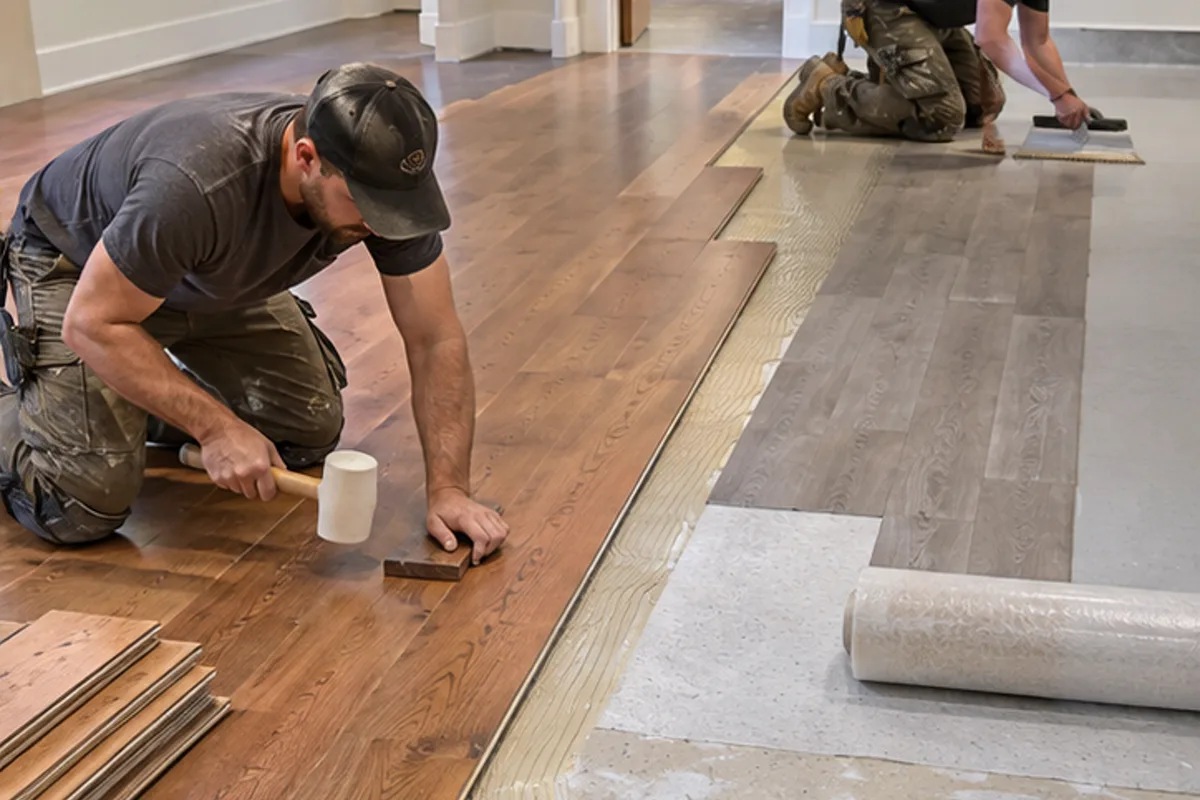
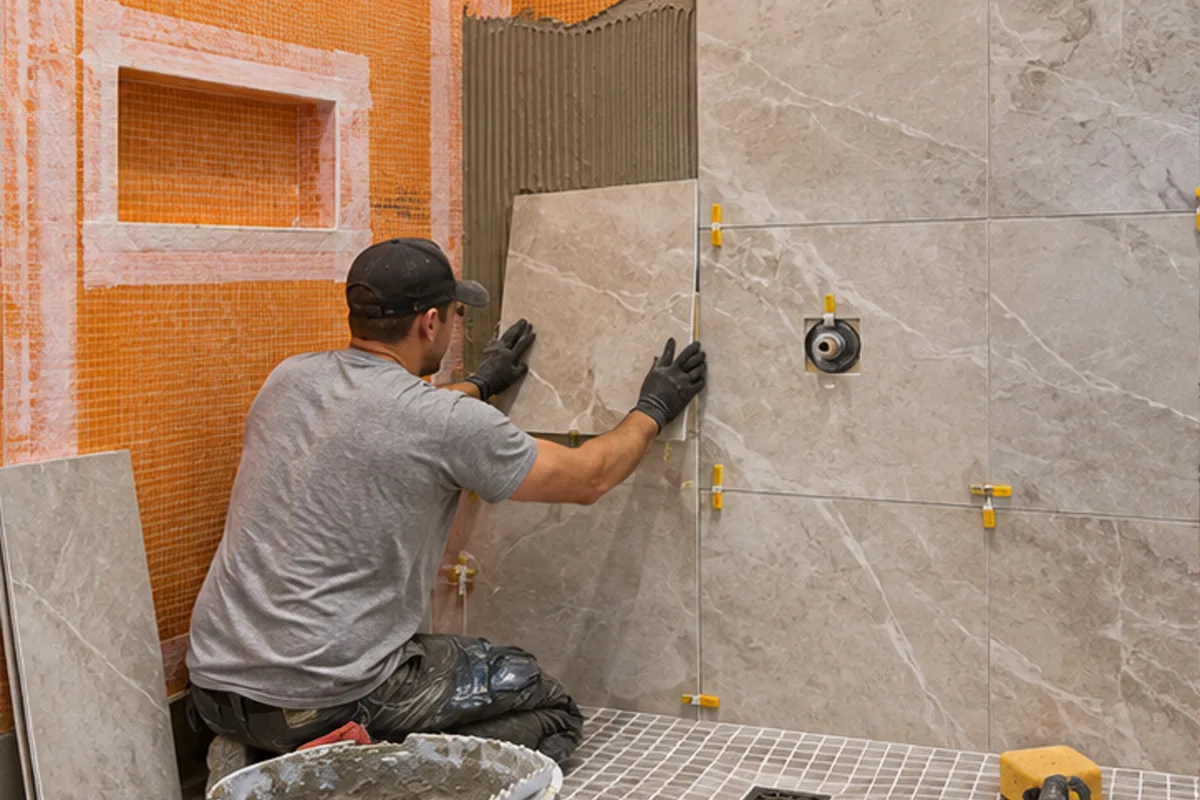
Assess and test the substrate before removing, repairing or leveling as required. Establish the manufacturer's environmental and acclimation conditions before installation, then coordinate layout and transitions with adjacent finishes. Respect adhesive or finish cure, install remaining base and trim, and protect the floor during final equipment and furniture delivery.
Quality-Control Hold Points
Inspect substrate preparation, moisture results, layout, adhesive transfer, seams/joints, rolling, transitions and protection. Retain product/lot information and cleaning instructions.
Cost Drivers And Allowances
Cost moves with removal, hazardous-material handling, moisture mitigation, leveling, pattern, material waste, occupied phasing and furniture. Separate substrate allowance from finish material.
Schedule And Procurement
Acclimation, environmental conditioning, substrate cure and adhesive cure can control schedule. Install late enough to avoid damage but early enough for base, fixtures and turnover cleaning.