
Architectural-Shingle Replacement
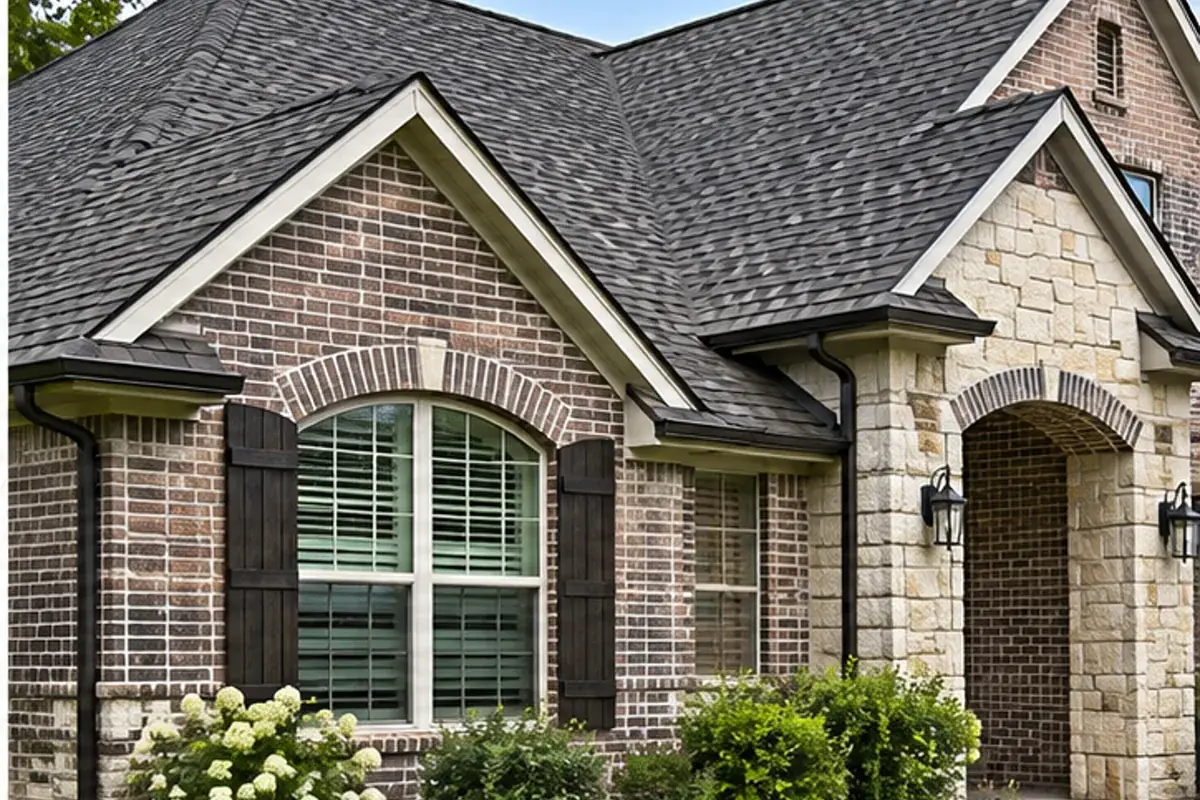
Complete tear-off and replacement with coordinated underlayment, ventilation, flashings, ridge, and cleanup.
Residential Roofing
Plan a residential roof replacement around hail exposure, complete-system details, leading Class 4 products, transparent price bands, insurance boundaries, and written warranty requirements.
A Complete Residential System
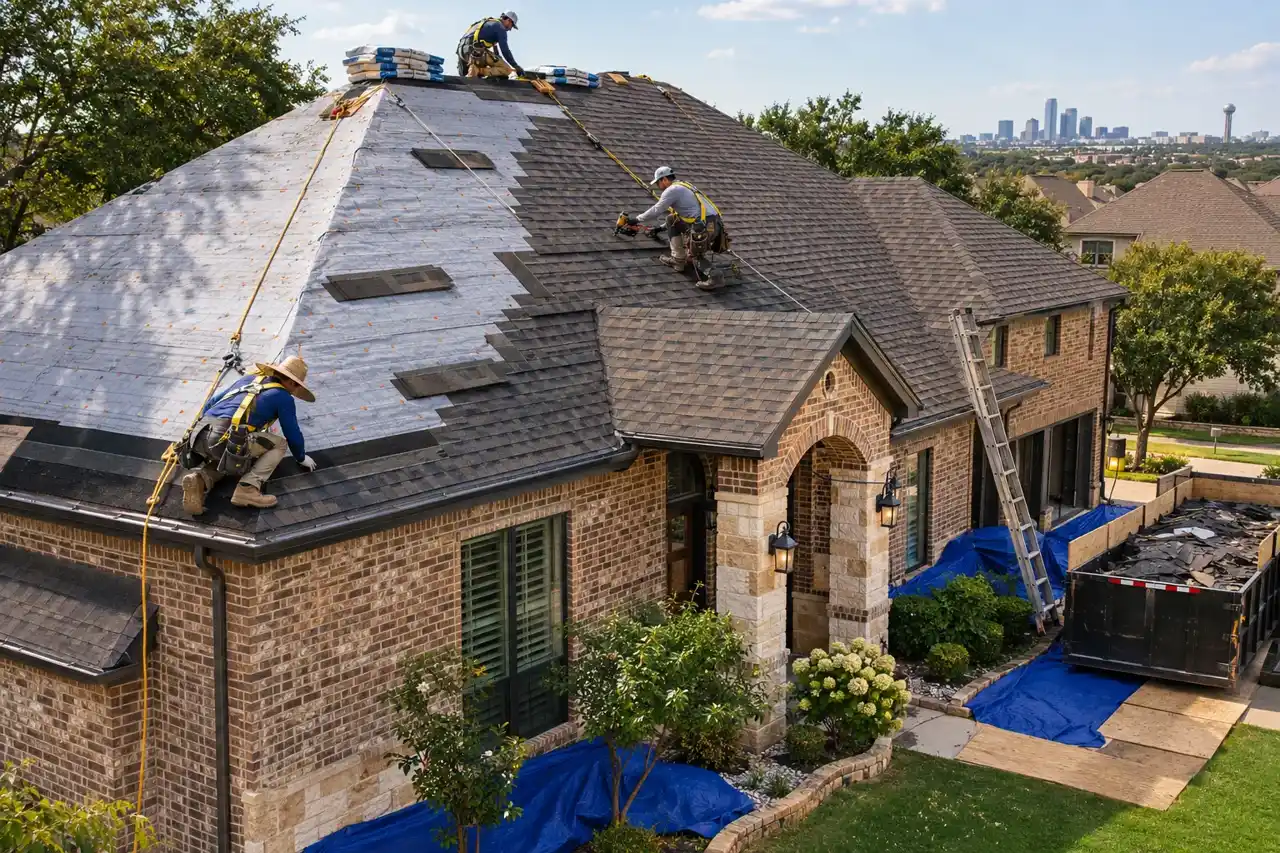
A roof-replacement scope should address tear-off, decking inspection, underlayment, ice-and-water protection where specified, valleys, starter, field shingles, hip and ridge, ventilation, flashings, pipe penetrations, wall transitions, drip edge, gutters or drainage interfaces, cleanup, permits, and magnetic nail collection. The estimate should state the number of layers being removed, decking allowance, shingle line, impact rating, ventilation changes, flashing treatment, and warranty documentation.
Architectural shingles remain the most common residential choice. Class 4 impact-resistant products can make sense in North Texas hail exposure, but “Class 4” is a laboratory impact classification, not a promise that hail cannot damage the roof. Homeowners should ask their insurer whether the exact product qualifies for a premium discount and whether the policy applies an appearance exclusion, cosmetic-damage limitation, or different deductible.
Hail, Heat, And Ventilation
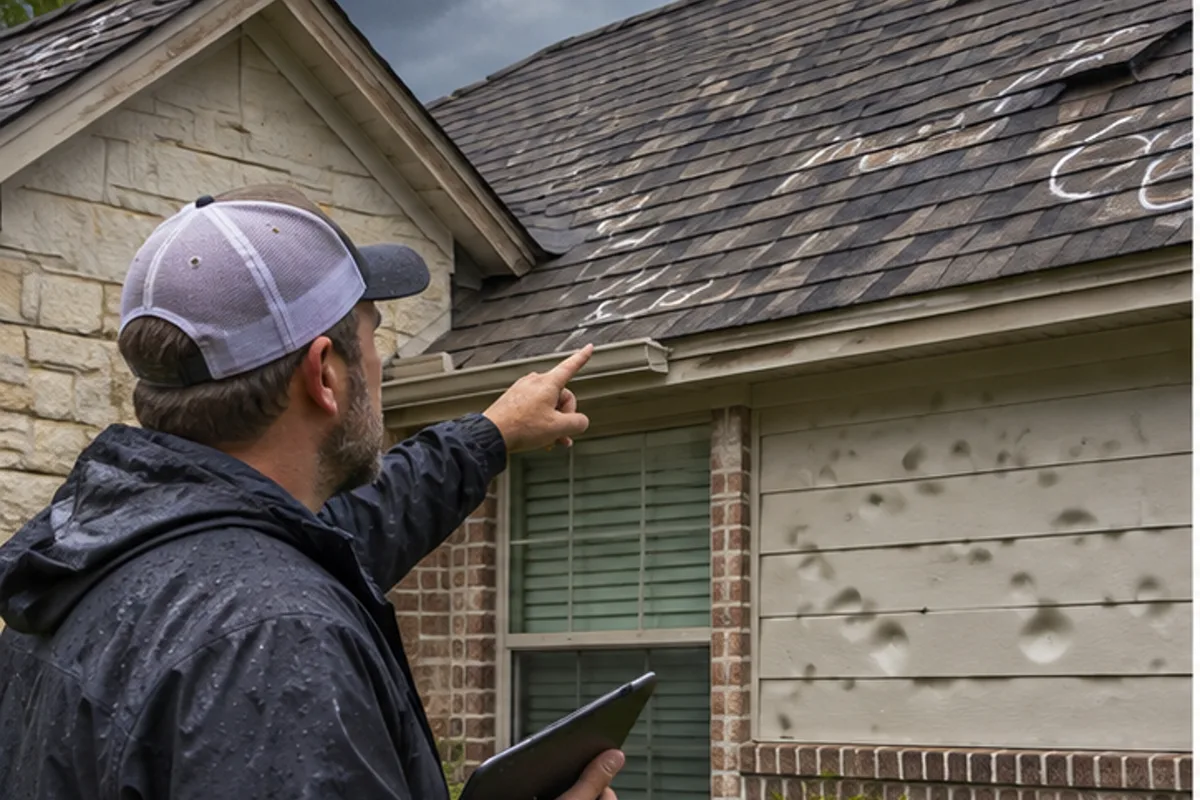
Hail can bruise asphalt, fracture mat, loosen granules, damage metal, crack accessories, and affect soft metals before an interior leak appears. High heat and poor attic ventilation can accelerate aging. The roof assessment should also look at decking, intake and exhaust balance, bathroom or dryer terminations, flashing, drainage, tree exposure, and previous repairs.
After a storm, emergency protection should prevent additional damage without erasing evidence needed for the insurance process. A contractor can document observed conditions and prepare a construction scope, but coverage decisions belong to the insurance carrier and policy. Owners should avoid signing documents they do not understand and should never be told that a deductible can simply be waived.
Five Leading Shingle Manufacturers
Frequently compared manufacturers include GAF, Owens Corning, CertainTeed, Atlas, and IKO. North Texas Class 4 options may include GAF Timberline AS II, Owens Corning Duration FLEX, CertainTeed Landmark ClimateFlex, Atlas Pinnacle Impact or StormMaster, and IKO Nordic, subject to current availability and published classifications. Each manufacturer offers multiple product families with different construction, colors, wind provisions, impact ratings, algae coverage, and warranty terms.
Extended manufacturer coverage often requires a complete qualifying system and an authorized or certified contractor. Owens Corning, for example, publishes different coverage levels based on the number of matching components and contractor status. Always review the actual warranty document for the selected product and installation—not a marketing summary.
From Inspection To Closeout
The process should include measurement, condition documentation, material selection, code and permit review, written scope, scheduling, delivery and property protection, tear-off, deck review, installation, cleanup, final inspection, photographs, and warranty information. Weather, decking repairs, steep pitch, complex geometry, solar equipment, multiple layers, and specialty flashings can change the schedule.
Most standard asphalt replacements take one to several working days after materials and permits are ready; complex, steep, large, tile, or metal projects take longer. My Choice Builders carries $5 million in general-liability and combined coverage and advertises licensed and bonded operations. Certificates, project-specific bond requirements, and policy details should be confirmed for the contract at hand.
Displayed ranges are illustrative planning allowances, not verified DFW averages or a quotation. Census publishes price indexes and NAHB studies national homebuilding costs; neither source establishes local prices for this service. Confirm quantities, site conditions, systems, finishes, exclusions and contingency through a written scope.
2026 DFW Planning Ranges
Typical tear-off replacement range; pitch, layers, deck, geometry, flashings, and ventilation affect cost.
Exact product, accessory system, roof complexity, and manufacturer requirements affect the number.
Gauge, profile, coating, clips, geometry, substrate, tear-off, and trim details drive price.
These are 2026 DFW planning ranges, not insurance valuations or binding quotes. Roof measurement, pitch, layers, decking, flashings, ventilation, access, permit, product, and system eligibility determine final pricing.
Projects We Are Equipped To Deliver
Complete tear-off and replacement with coordinated underlayment, ventilation, flashings, ridge, and cleanup.
Impact-rated product comparison, accessory requirements, insurer documentation, and complete-system installation.
Long-life metal assemblies for suitable homes, additions, porches, and architectural roof sections.
Condition documentation and coordinated roofing, gutters, flashing, siding, paint, and related repair work where contracted.
Trade-Specific FAQs
A measured roof area and written replacement scope are needed for a meaningful total. Published unit-price examples can support an early comparison, but pitch, layers, decking, flashings, ventilation and access must be evaluated before applying a per-square-foot range to your home.
No. Class 4 indicates performance in a defined impact test. Severe hail can still damage the roof, and warranty or insurance treatment depends on the exact product and policy.
Some insurers offer discounts for qualifying products and documentation. Ask the carrier about the exact product, required forms, deductible, cosmetic exclusions, and renewal treatment.
Only an exposed tear-off can fully reveal deck conditions. The proposal should state how decking replacement is measured and priced if deteriorated or noncompliant areas are found.
The written scope should identify each flashing condition. Some items may be replaceable, while masonry, siding, stucco, or embedded counterflashing can require a project-specific detail.
Many asphalt-shingle roofs take one to several workdays after approvals and delivery. Size, pitch, layers, weather, decking, access, and specialty details affect duration.
We can document conditions and prepare a construction scope. The carrier interprets coverage and the owner remains responsible for the deductible and contract.
Coverage depends on the selected manufacturer, components, installer eligibility, registration, and written contract. Review material and workmanship documents separately.
Licensed · Bonded · $5M Insured
Bring plans, a property address, or simply an idea. We’ll help you understand the next step.
Professional protection for residential and commercial work. No finished plans required.Technical Execution Guide
Deck, underlayment, flashings, ventilation and field roofing must work together.
Assess deck, layers, penetrations and transitions; protect occupied areas and property.
Replace unsuitable sheathing and install compatible underlayment and edge metal.
Build valleys, walls, chimneys, curbs, skylights and penetrations in water-shedding sequence.
Install shingles, standing seam, TPO or specified assembly to manufacturer requirements.
Verify ventilation, sealants, fastening, drainage, cleanup and warranty documentation.
Detailed Field Guide
A roof replacement or new roof is a complete assembly: deck, edge, underlayment, valleys, flashings, penetrations, ventilation, field covering and drainage. North Texas hail, heat and wind make transitions and attachment as important as product color.
Start With Existing Conditions
Document roof geometry, pitch, layers, deck condition, leaks, soft metals, ventilation, wall intersections, solar or equipment and interior evidence. Confirm whether repair, recover or full tear-off is technically appropriate.
Define The Complete Assembly
Specify deck repair rules, underlayment, leak-barrier locations, starter, field shingle or metal profile, hip/ridge, ventilation, flashings, pipe boots, drip edge, sealants and manufacturer-compatible accessories.
Coordinate The Adjacent Trades
Coordinate siding/stucco transitions, chimneys, gutters, attic insulation, bath/dryer exhausts, HVAC or plumbing penetrations, solar and low-slope tie-ins. Roofing details should be released before adjacent cladding locks them in.
Sequence The Work
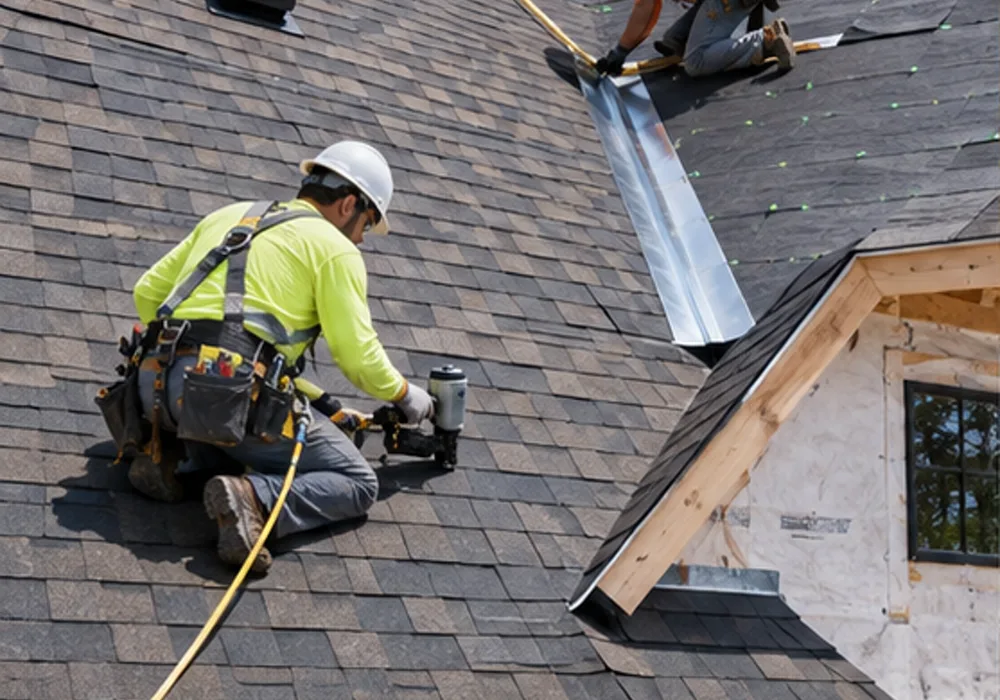
Protect the property and limit exposed tear-off areas before removing roofing. Inspect the deck, complete approved repairs and install the compatible dry-in assembly. Integrate flashings with walls and penetrations before the final roof covering, then verify ventilation, cleanup and closeout records before removing protection.
Quality-Control Hold Points
Inspect deck fastening, dry-in, valley and wall flashing, penetration boots, fastener exposure, ventilation and final cleanup. Preserve product labels, installation photos and warranty registration documents.
Cost Drivers And Allowances
Cost depends on measured roof area, pitch, height, layers, deck replacement, geometry, flashings, ventilation, access and product system. An allowance for concealed deck repair should state unit pricing and approval process.
Schedule And Procurement
Material delivery, permit, weather and deck discoveries affect duration. Keep daily dry-in limits realistic and do not open more roof than can be protected before changing weather.